Table of Contents
For the enterprising individuals in the heartlands of Karnataka — from the bustling markets of Hubballi and Belagavi to the emerging hubs of Hassan and Tumakuru — your home is more than just a roof over your head.
As small businesses in rural areas look to modernize, expand inventories, or diversify, many entrepreneurs are turning to their property to bridge the capital gap. In this guide, we explore how leveraging your property can fuel expansion and why choosing the right financial partner is critical for rural entrepreneurs.
Why Home Equity is the Smartest Capital for Rural Businesses
When scaling a business in a Tier 3 or Tier 4 city, traditional unsecured business loans often come with high interest rates and short repayment terms that can strain your monthly cash flow. Using your home equity — either through a Loan Against Property or by optimizing your existing rural home construction loan — provides a clear strategic advantage.
| Feature | Unsecured Business Loan | Loan Against Property (LAP) |
|---|---|---|
| Interest Rate | High (15% – 24%) | Moderate (10% – 14%) |
| Loan Tenure | Short (1–3 years) | Long (up to 15–20 years) |
| Loan Amount | Limited | High (based on property value) |
| Collateral | None | Property required |
Secured lending offers significantly lower interest rates due to reduced risk for the lender. For a rural entrepreneur, this means lower monthly EMIs and more working capital to reinvest into business operations.
Navigating Home Finance in Rural Karnataka
For self-employed individuals, accessing credit can often feel like a hurdle. However, specialized lenders understand the nuances of rural income proof and property documentation. The focus should be on lenders who value alternative income verification — an approach championed by facilitators like Nivāsa Finance.
The Nivāsa Finance Advantage
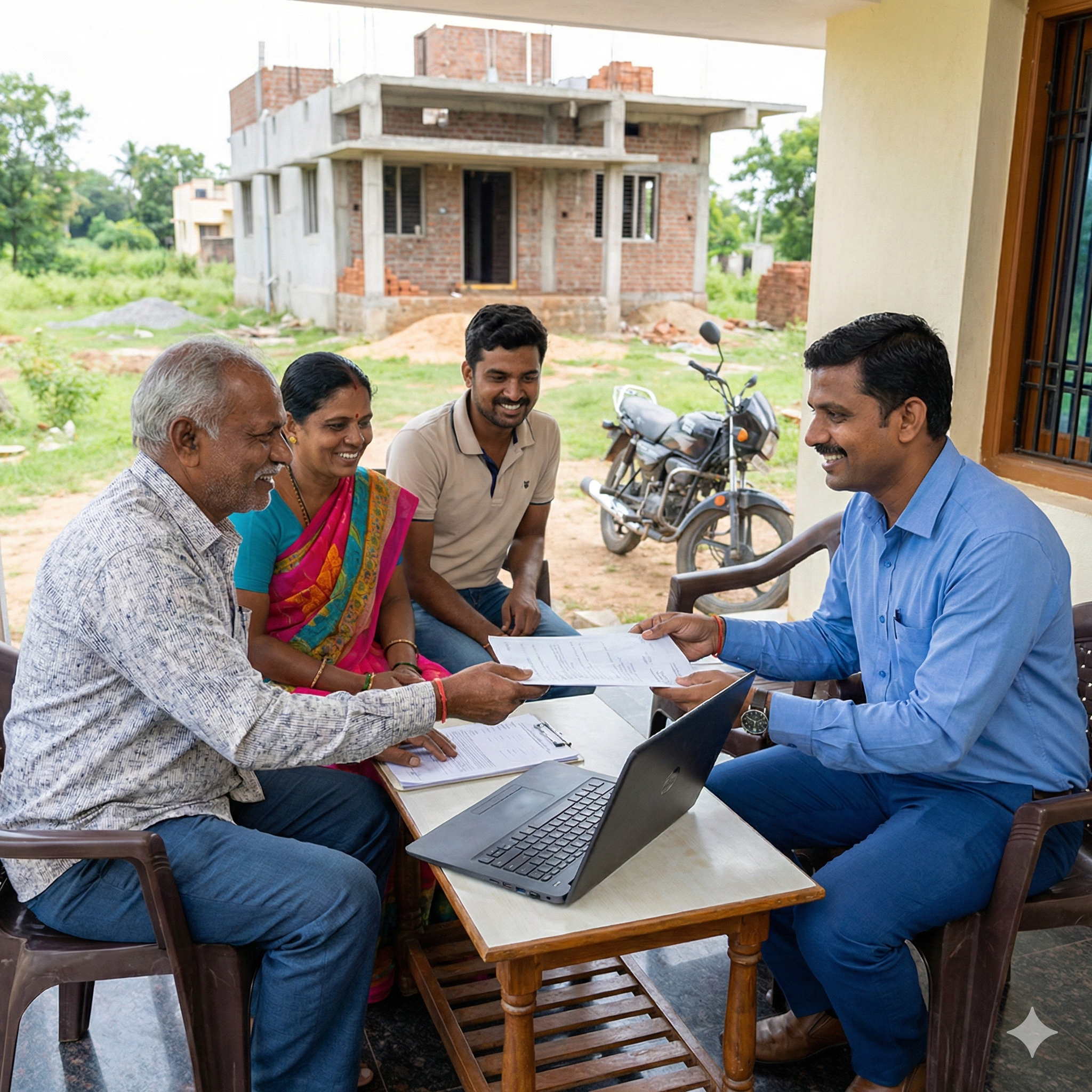
As a dedicated intermediary, Nivāsa Finance acts as a bridge between rural applicants and formal banking systems. Their expertise lies in simplifying the loan process, ensuring that applicants in rural Karnataka don't get lost in the complex paperwork usually associated with large national banks.